


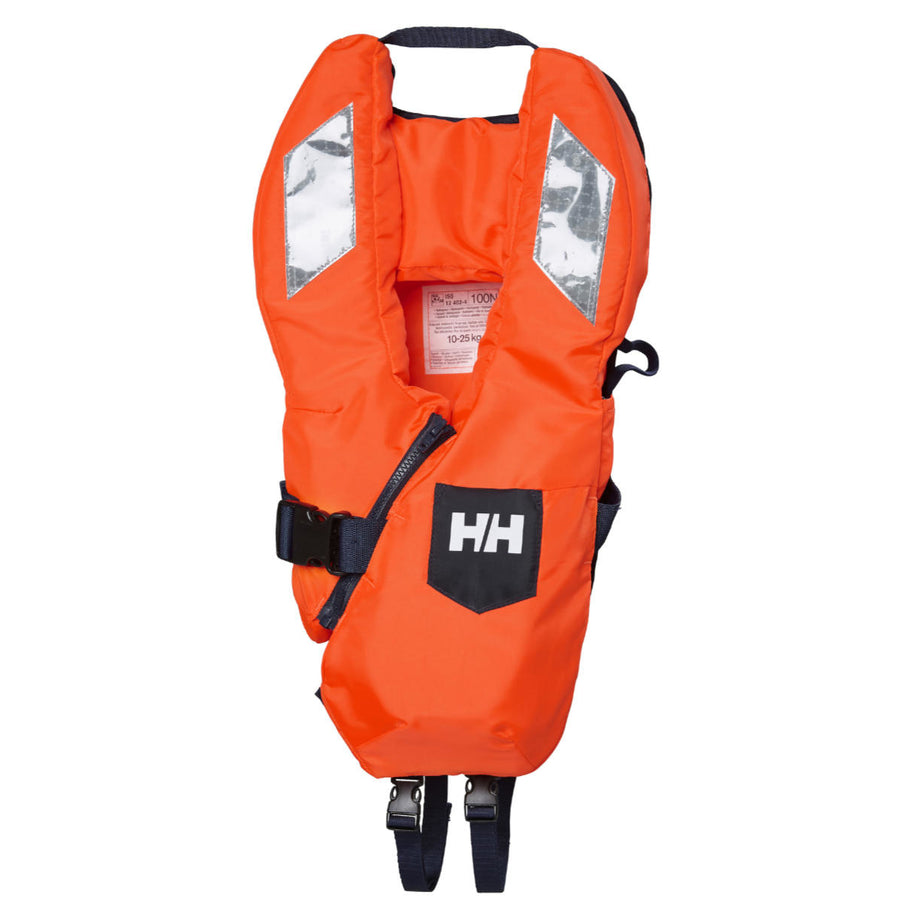
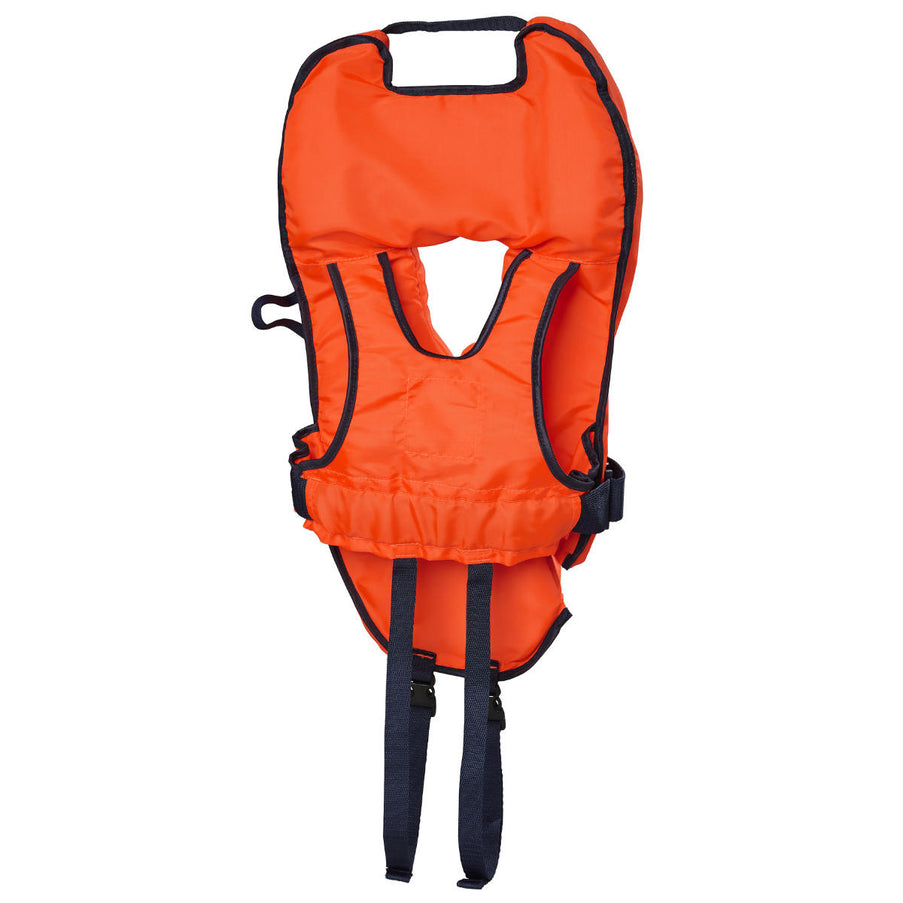
Child life jacket: safe on the water
A child life jacket is a buoyancy device that automatically turns an unconscious or exhausted child onto their back and keeps their head above water, without the child needing to do anything. That makes a child life jacket fundamentally different from a buoyancy aid. For children on open water, on a sailing boat or aboard a motorboat, Secumar, JOBE and Helly Hansen are the most reliable brands in our range.
Whether you're taking a toddler on a day trip or kitting out a teenager for a sailing holiday: the Newton rating and type of filling determine which life jacket fits. Below you'll find an overview of the available classes and their applications.
Newton rating overview for children
| Newton rating | Filling type | Recommended child weight | Application |
|---|---|---|---|
| 50N | Fixed foam | From 15 kg | Sheltered inland water, supervision present |
| 90N | Fixed foam | 15 to 40 kg | Inland water, recreational sailing |
| 100N | Fixed foam | 15 to 40 kg | Inland and coastal water |
| 110N | Fixed foam | From 25 kg | Coastal water, rougher conditions |
| 150N | Auto-inflatable | From 30 kg | Coastal and offshore, sailing boats |
| 275N | Auto-inflatable | From 40 kg | Offshore, heavy weather, sea vessels |
Difference between a buoyancy aid and a life jacket for kids
A buoyancy aid has no collar and won't automatically turn an unconscious child onto their back. It offers more freedom of movement, which is handy for watersports like wakeboarding or waterskiing. A life jacket has an upright collar that keeps the head up in case of unconsciousness. For children who can't swim or who are on larger bodies of water, a life jacket is the safest choice. Checkadult life jacket range for more information on differences per type.
Fixed foam or auto-inflatable?
A fixed foam life jacket always works, without the child needing to do anything. It's immediately recognisable by its shape and reliable in all conditions. Ideal for young children and situations where quick action is needed. An auto-inflatable life jacket is slimmer and more comfortable, but requires a minimum body weight of 30 kg. It inflates on contact with water via a salt tablet. On a sailing boat with parental supervision this can be a great choice, but for children who might unexpectedly fall near water we recommend fixed foam.kids' buoyancy aid range covers supervised watersport activities.
Frequently asked questions about child life jackets
When should you choose a life jacket instead of a buoyancy aid for your child?
Always choose a life jacket if your child can't yet swim confidently, if they're on open water without direct supervision, or if conditions can change unexpectedly such as at sea or on a large lake. A life jacket automatically turns an unconscious child onto their back so their head stays above water. A buoyancy aid doesn't do this. On sheltered inland water with supervision a buoyancy aid may be enough, but the safest default choice for children on water is always a certified life jacket meeting EN ISO 12402.
Which Newton rating does my child need?
For calm inland water, 90N or 100N is enough. For coastal water and sailing, choose at least 150N. For offshore use or heavy weather, 275N is the standard. The rating tells you about buoyancy: the higher the number, the better the vest keeps the head above water. Always match the Newton rating to the child's weight: every model has a minimum and maximum carrying weight. Check the norm on the label, EN ISO 12402 is the current European standard for life jackets.
Fixed foam or auto-inflatable for children?
For children under 30 kg, fixed foam is the only responsible choice: auto-inflatable vests are not approved for this weight. For children over 30 kg an auto-inflatable vest is an option, but only if they can swim independently and understand how the vest works. Auto-inflatable vests are slimmer and more comfortable for sailing or motorboats, but less suitable if the child is playing near water and could fall in unexpectedly. Fixed foam reacts instantly with no action needed.
How do you pick the right size child life jacket?
Children's life jackets are sized by weight, not age. Always determine the child's weight and check the size chart for the specific model. The vest must fit snugly so it can't slip over the head: check this by lifting the child by the shoulder straps. There should be no more than two finger-widths of space between the child and the fastening. Adjust the harness and all straps before use. Helly Hansen and Secumar provide weight intervals per model.
In stock? Otherwise, as soon as possible. Not sure which life jacket suits your child? Our specialists are happy to help.
