
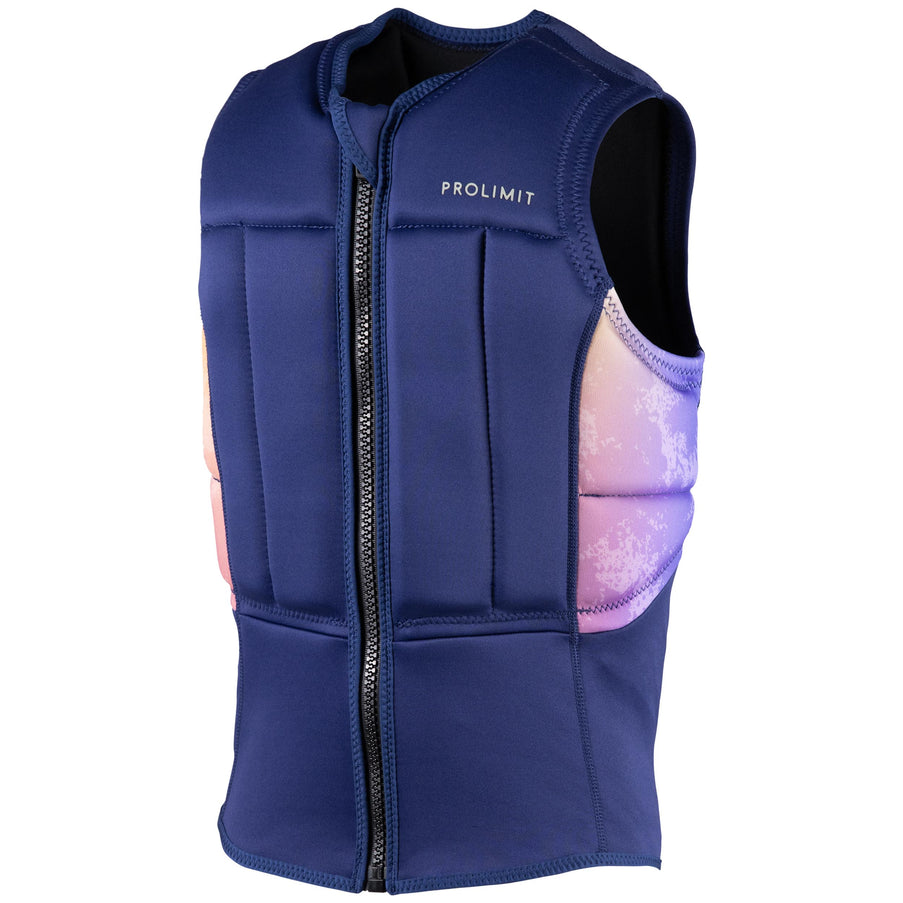

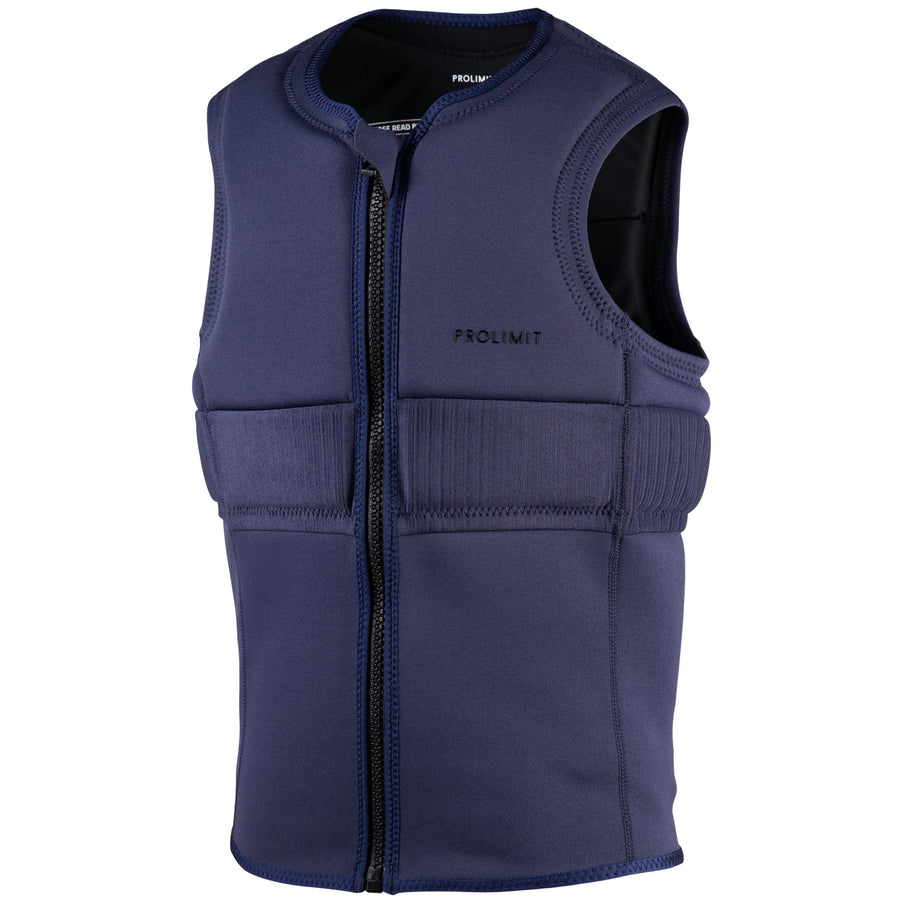


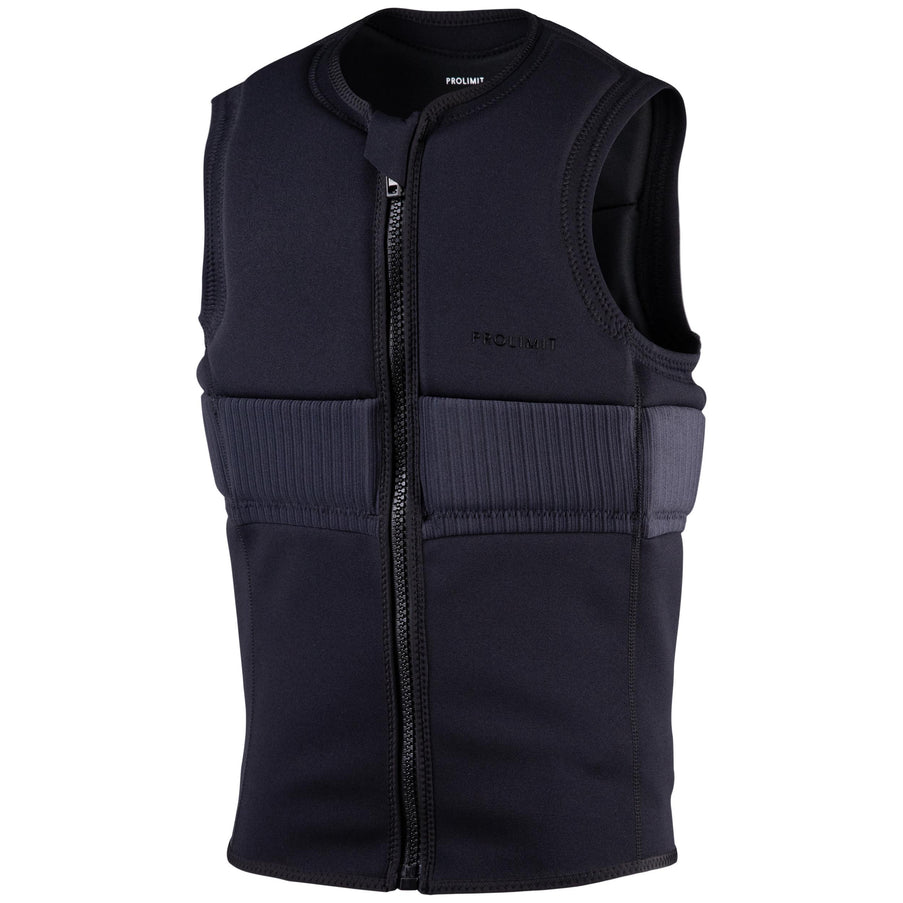


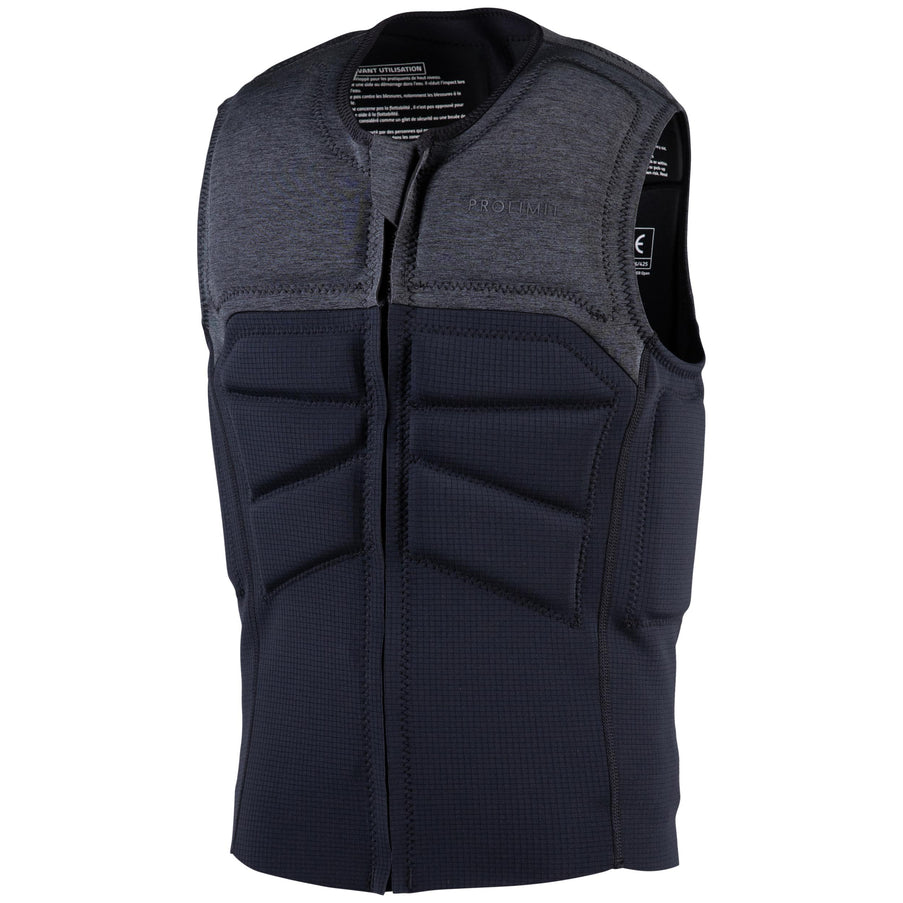


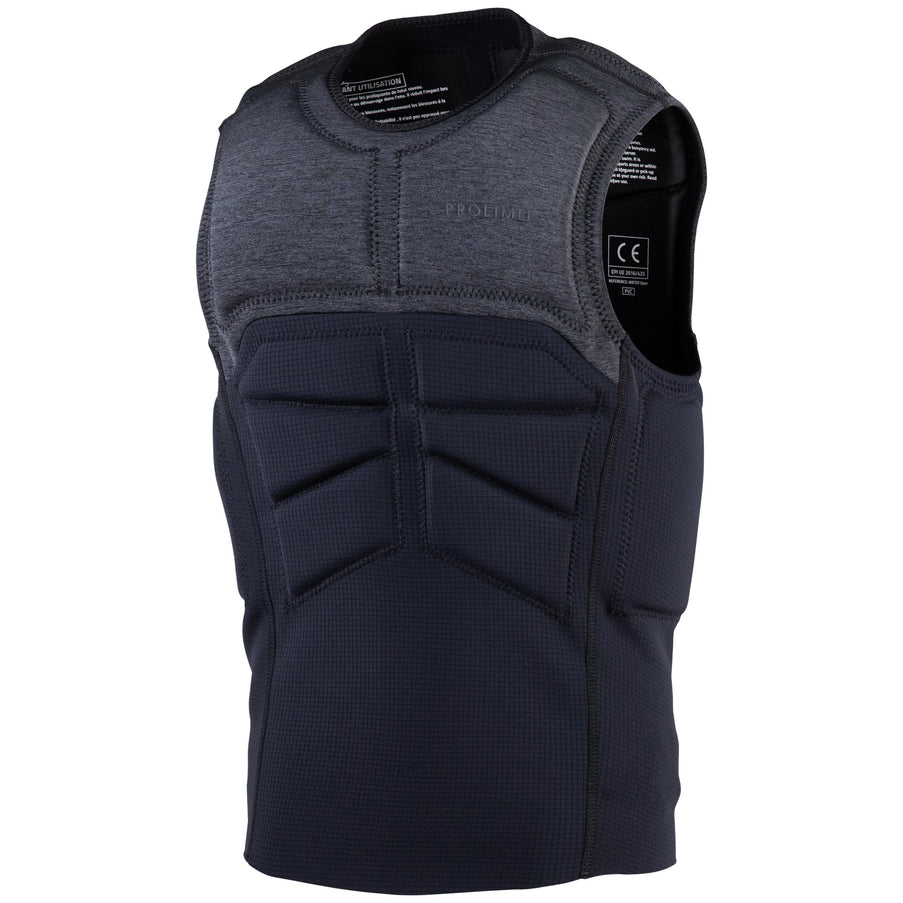


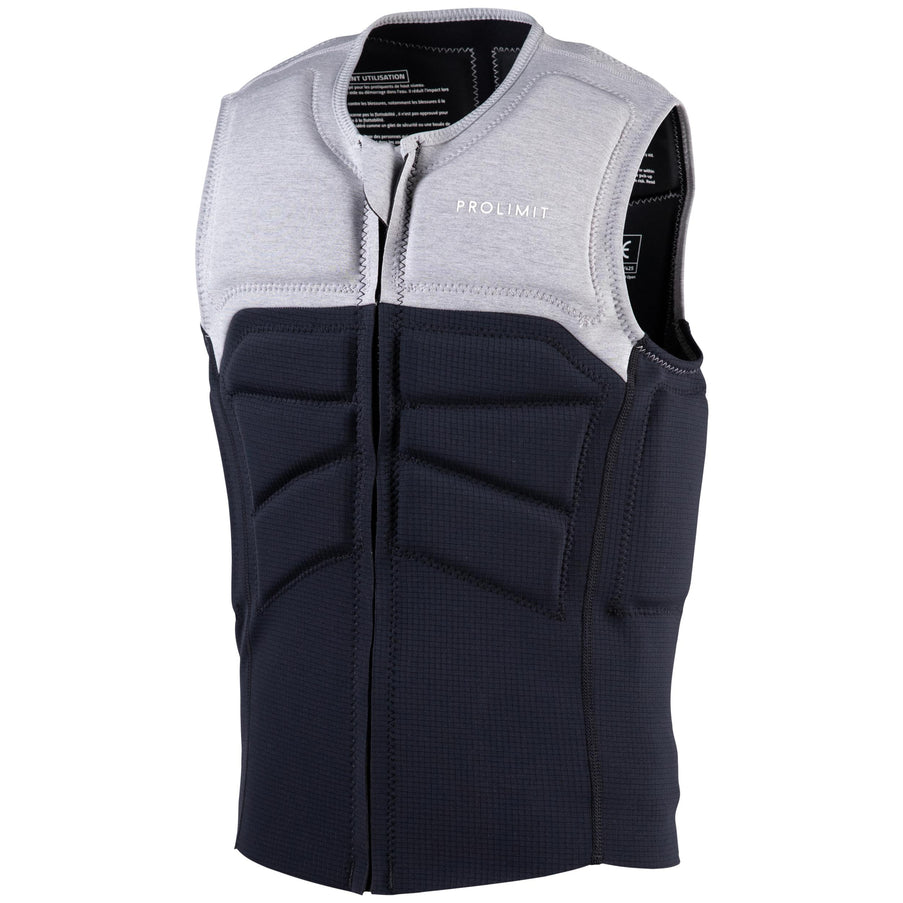


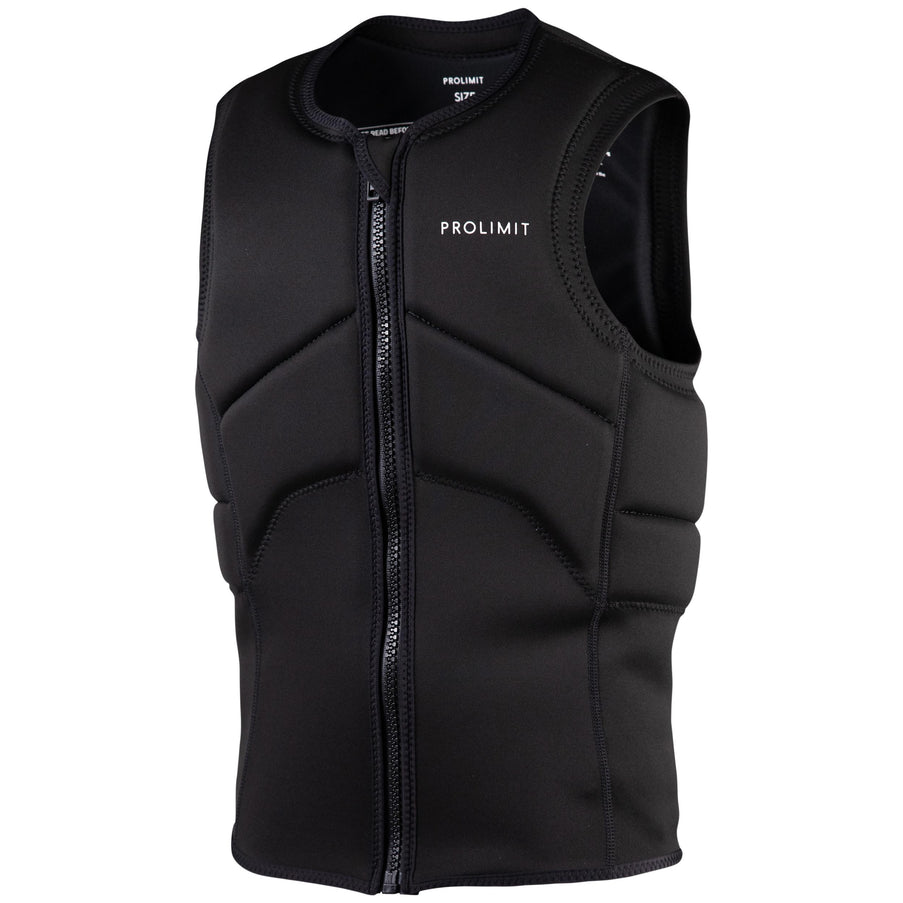

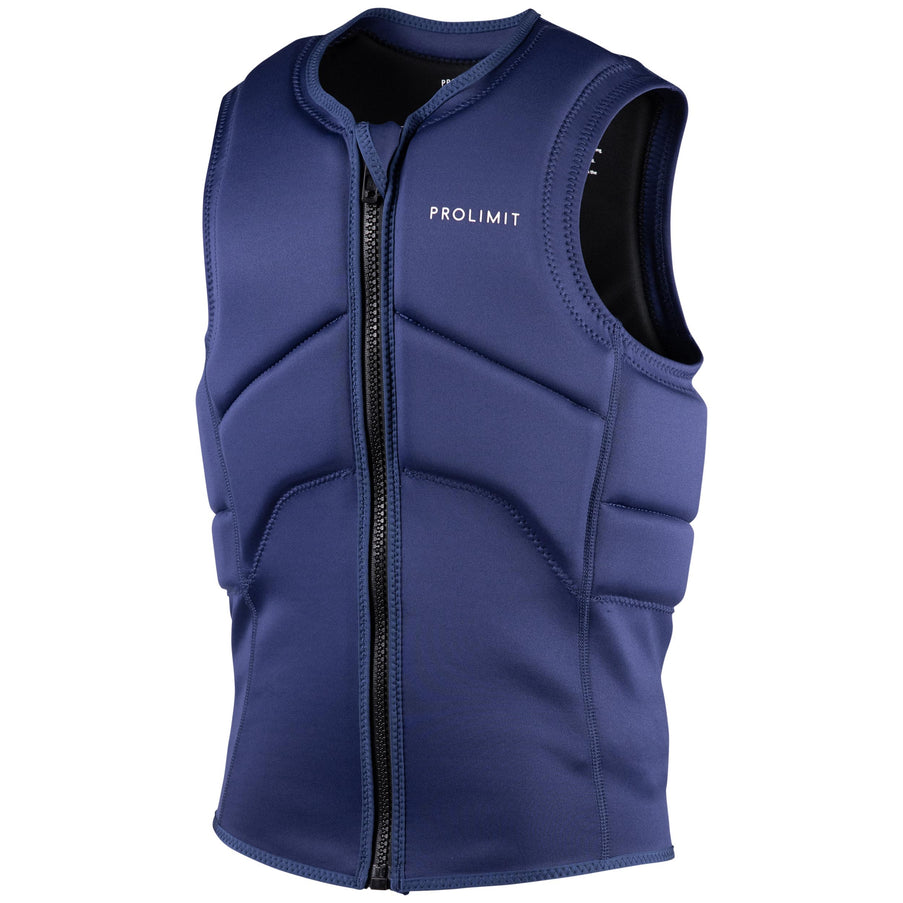


An impact vest is a vest with EVA hard foam panels that protects your ribs, chest and back when you fall onto the water. The foam absorbs the impact you would otherwise feel directly when landing hard after a jump or falling flat onto the water surface. JOBE, Prolimit and Secumar offer models for wakeboard, kitesurf and windsurf, with CE 50N buoyancy aid as extra safety.
Which type of impact vest suits your sport?
| Type | EVA thickness | Protection level | CE standard | Best |
|---|---|---|---|---|
| Neoprene stretch | 5-8 mm | Basic rib and chest protection | CE 50N | Kitesurf, wing foil |
| Nylon shell | 8-10 mm | Full torso coverage | CE 50N | Wakeboard, wakesurf |
| Hardshell (full padded) | 10-14 mm | Full ribs, chest and back | CE 50N | Wakeboard cable park, tricks |
| Neoprene race-fit | 4-6 mm | Light protection, freedom of movement | CE 50N | Windsurf, race kite |
Difference from a buoyancy aid
An impact vest is not a life jacket. The CE 50N label means the vest provides buoyancy assistance for sporting situations but is not designed to turn an unconscious person face up. That is what a life jacket (CE 100N or 150N) does. For maximum safety on open water checkbuoyancy aids. For protection during tricks and jumps on a wakeboard or kitesurf, choose an impact vest.
Choosing your size
Impact vests are sized by chest circumference. Size XS starts at around 75-80 cm, size XXL goes up to 120 cm. Always check the size chart of the specific model, as Prolimit and JOBE can differ by model. The vest should fit snugly but comfortably without squeezing the ribs. A too-loose vest rides up during a hard impact and provides less protection. Also browsewakeboard vests for models with extra buoyancy.
Frequently asked questions
What does an impact vest do differently from a regular buoyancy aid?
An impact vest is primarily protection-focused: the EVA foam layers absorb the impact of falling onto the water surface, which at high speeds or after a jump feels like hitting concrete. A buoyancy aid is primarily about flotation: it keeps your head above water if you are unconscious. Most impact vests also carry CE 50N buoyancy aid approval, but that is a secondary benefit, not the main function. Choose an impact vest for active board sports; choose a buoyancy aid as a safety device on open water or for less confident swimmers.
How do I choose the right size impact vest?
Measure your chest circumference at the widest point, horizontally all the way around. Compare the measurement with the size chart of the specific model. Impact vests fit tighter than buoyancy aids; a good fit is firm without restricting movement. Test by stretching your arms upward: the vest should not ride up more than 2-3 cm. If your measurement falls exactly between two sizes, choose the larger size when wearing the vest over a wetsuit or rash guard, and the smaller if you are wearing nothing underneath.
Does an impact vest need to be CE certified?
In Europe, buoyancy aids must carry CE marking under the EN ISO 12402 standard. CE 50N means the vest offers at least 50 Newtons of buoyancy and is suitable for swimmers in calmer water. CE 50N is the standard level for kitesurfing and wakeboarding. Choose CE 100N or 150N when surfing on open sea or near shipping. Note: a vest without CE marking may offer physical protection but provides no guaranteed buoyancy.
Which impact vest for kitesurf vs wakeboard?
For kitesurfing choose a slimmer neoprene or nylon model with relatively thin EVA panels, so you retain freedom of movement when steering the kite and performing manoeuvres on the water. The Prolimit Fusion and JOBE Impress are popular kitesurf choices. For wakeboarding choose a thicker, fully padded model such as the Prolimit Predator Full Padded or the JOBE Shield Hardshell, which offer better protection during hard landings after ramp and kicker tricks in a cable park.
In stock? Otherwise, as soon as possible. Not sure? Our specialists are happy to help.
